There are many anti-aging promises, from natural miracle cures to high-tech treatments. Yet the most effective strategies for healthy aging are often surprisingly easy. What we eat on a daily basis, how much we exercise or how well we sleep—a lot of small decisions influence how healthily we age. This is the starting point of the new book by cell biologist Corina Madreiter-Sokolowski of the Medical University of Graz and general practitioner Kristina Hütter-Klepp: They show how our lifestyle has an influence on the aging process. The sooner you start to adopt a healthier lifestyle, the better, because critical trajectories are set at a young age.
In various research projects funded by the Austrian Science Fund (FWF), Madreiter-Sokolowski is also exploring the cellular mechanisms of aging and attempting to identify new targets for healthy aging strategies.
Lifestyle influences how we age
How can we live healthily as long as possible and age healthily? At Med Uni Graz, scientists involved in interdisciplinary exchange have devoted themselves to this question and shown that our lifestyle plays a deciding role. "We are working intensively on new approaches that keep cells healthy for longer. Only on the basis of a healthy lifestyle can they reach their greatest potential," emphasizes cell biologist Madreiter-Sokolowski. To a large extent, it is possible to influence whether and how we age. "Studies show that factors such as exercise, diet, sleep or social integration can significantly extend a healthy lifespan, with certain ones adding even more than a decade," explains the researcher.
Some of the most important factors are regular exercise, a plant-based diet, sufficient sleep, stress reduction and not smoking. Social contact also plays a key role: Social isolation can have impacts on health almost as negative as those of known risk factors.
Exercise, diet and sleep as the basis
Even simple measures have measurable effects: "Even a brisk daily walk can clearly lower the risk of cardiovascular disease," says Madreiter-Sokolowski. What is crucial is the combination of endurance and strength training to strengthen the muscles, metabolism and cardiovascular system in the long term.
Diet also has a great influence on the aging process. A varied, fiber-rich and mostly plant-based diet has an anti-inflammatory effect and supports central metabolic processes. Chronic, low-level inflammation, or "inflammaging," is considered to be partly responsible for many age-related diseases.
Sufficient sleep is equally important. During the night, cellular repair mechanisms are activated and harmful metabolic products are broken down.
Small decisions with a large impact
Along with exercise and diet, daily habits have a significant influence on health in old age. Smoking shortens life expectancy by around ten years on average and is associated with numerous diseases. Alcohol should also be regarded critically: From a scientific perspective, there is no safe amount that can be consumed.
"Healthy aging does not mean to prolong life as long as possible, but to extend the healthy years," explains Madreiter-Sokolowski. What is critical is an evidence-based approach: Measures should be supported by science and tailored to the individual.
Aging begins in the cells and daily life
The research at Med Uni Graz shows that aging does not progress linearly. Instead, it is characterized by dynamic changes. Thus early prevention can be especially effective. Along with new scientific approaches, one key finding remains: Many of the most effective measures for healthy aging are already known and can be implemented in daily life. Or as the expert summarizes it: “Healthy aging begins not in old age but with the decisions we make every day.”
Profile: Corina Madreiter-Sokolowski
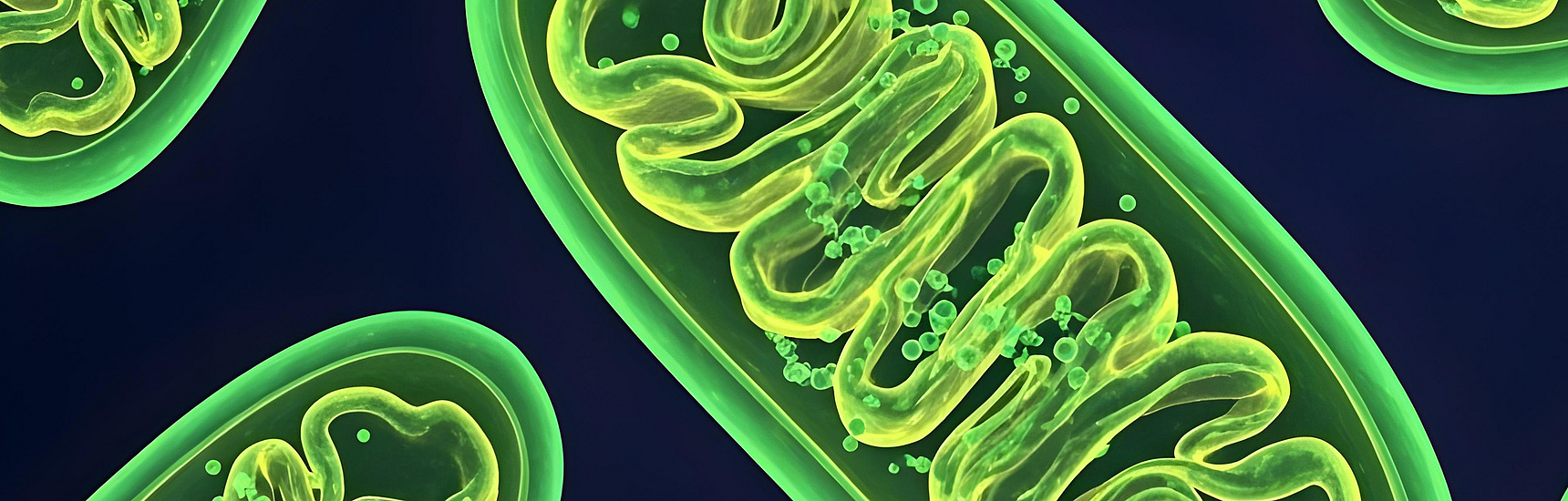
Corina Madreiter-Sokolowski is an associate professor of molecular aging at the Medical University of Graz and deputy head of the Division of Molecular Biology and Biochemistry. Her work focuses on the mitochondria, the "powerhouses" of the cell, whose function and age-related changes she investigates with her team. Using state-of-the-art fluorescence microscopy and innovative biosensors, she and her team analyze processes in living cells, including metabolic activity, ion currents and structural changes. Her research includes cellular aging models, cancer cells, patient samples and model organisms such as the threadworm Caenorhabditis elegans. The goal is to identify new targets for anti-aging therapies and to develop strategies for keeping cells healthy for longer and better treating age-related diseases.
#Healthy Aging
Healthy Aging at Med Uni Graz—Research, Education and Practice in Dialog.