Otto Loewi Forschungszentrum

Research focus: Chronic respiratory and pulmonary diseases

PI: Grazyna Kwapiszewska

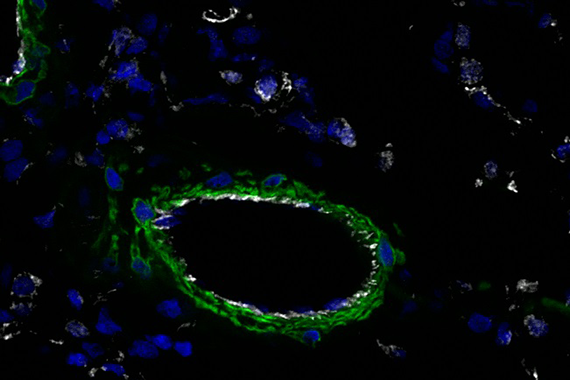
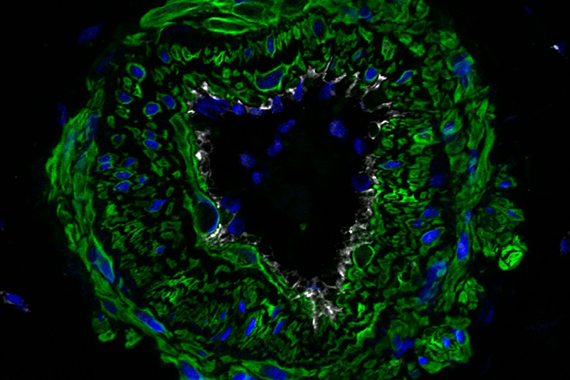
Focus: Pulmonary vascular remodelling has a multifactorial pathobiology characterized by changes in the endothelium, smooth muscle cells, and adventitia. These pathological changes lead to a remodeling of the pulmonary circulation and a massive alteration of the lumen in small- and medium-sized pulmonary arteries. Involvement of vascular component is present not only in pulmonary arterial hypertension (PAH) but also in chronic lung diseases such as chronic obstructive pulmonary disease (COPD) and lung fibrosis (PF), and when present deteriorates patients´ outcome, underscoring the importance of the vascular bed in these diseases. To date, the causes and consequences of endothelial and vascular involvement in specifically in different forms of lung fibrosis are poorly understood. The goal of this research group is to decipher the role pulmonary vasculature/endothelial cells in lung diseases, in terms of abnormal cellular interactions, hyperinflammation, vascular barrier disorders, and an altered basement membrane composition.

Networking: Grazyna Kwapiszewska is also Professor at the Institute for Lung Health, Giessen, Germany. The group works very closely with preclinical (Akos Heinemann – Division of Pharmacology, Dagmar Kolb – Core Facility Ultrastructure Analysis) and clinical departments (Gabor Kovacs, Nikolaus Kneidinger – Division of Respiratory Medicine, Jörg Lindenmann - Division of Thoracic and Hyperbaric Surgery). The international cooperations are marked by outstanding publications with the Universities such as Stanford, Harvard, Denver Colorado, Charite Berlin and Lund University.
Projects

Interaction of Inflammatory Cells and Basement Membrane Components in the Development of PH

  • The extracellular matrix (ECM) has increasingly emerged as an active driver of disease progression. We have shown that basement membrane components are differentially regulated in various forms of pulmonary vascular diseases. In this project, we will investigate how the disruption of basement membrane homeostasis influences immune cells and thereby causes or exacerbates pulmonary diseases. Our goal is also to study how active ECM-derived fragments, known as matrikines, further drive vascular dysfunction and lung diseases.
  • Duration: 2021 - 2025
  • Funded by: Land Steiermark / FWF DOC 129, RespImmun
  • Project partners: Liliana Schaefer (Johann Wolfgang Goethe University Frankfurt am Main, Germany), Karin Tran Lundmark (Lund University, Sweden), Malgorzata Wygrecka (Universities of Giessen and Marburg Lung Center, Germany), Dagmar Kolb (Gottfried Schatz Research Center, Medical University of Graz)

Endothelial cells in interstitial lung diseases

  • Cellular heterogeneity, with its functional specialization and coordination, are key determinants for normal vascular and parenchymal lung function. We have already reported that endothelial cells alter their barrier function and activation properties during development of pulmonary fibrosis. We would like to further investigate how and which factors originating from endothelial cells can influence lung diseases.
  • Duration: 2019- 2026
  • Funded by: Medical University of Graz
  • Project partners: Martin Kolb (McMaster University, Canada), Jonas Schupp (Hannover Medical School, Germany), Marek Bartkuhn (Justus Liebig University Giessen, Germany)


Cathepsin C inhibition in pulmonary hypertension

  • The role of the immune system in the development of pulmonary arterial hypertension (PAH) is currently being investigated. Research has shown that certain immune cells release enzymes that can damage tissue and cause persistent inflammation in the lungs. In our studies, we have found that a protein called cathepsin C (CtsC), which activates these potentially damaging enzymes, is elevated in the lung tissue and blood vessels of PAH patients. The aim of this study is to understand how CtsC contributes to the development of PAH and whether blocking its activity could open up a new way to treat this disease.
  • Duration: 2025 - 2028
  • Funded by: FWF PAT5277424
  • Project partners: Malgorzata Wygrecka (Justus Liebig University Giessen, Germany) Brice Korkmaz (INSERM, France), Marcin Sienczyk (Wroclaw University of Technology, Poland), Marko Novinec (University of Ljubljana, Slovenia)


Collagen fingerprinting for stratification of PH patients

  • Chronic lung diseases such as pulmonary fibrosis and chronic obstructive pulmonary disease (COPD) are frequently complicated by pulmonary hypertension. We focus on disease-associated remodeling of the pulmonary vasculature, during which characteristic fragments of specific collagens are generated. We investigate whether these collagen fragments, detectable in the bloodstream, can serve as reliable biomarkers of pulmonary hypertension. 
  • Duration: 2026 - 2029

  • Funded by: FWF Grant-DOI 10.55776/KLP3022825 

  • Project partners: Claudia Staab Weijnitz (University of Colorado Denver – Anschutz Medical Campus, USA), Gabor Kovacs (Division of Respiratory Medicine, Medical University of Graz, Austria), Khodr Tello (Justus Liebig University Giessen and Northwestern Hospital Frankfurt, Germany), Leigh Marsh (Otto Loewi Research Center, Medical University of Graz, Austria), and Jochen Wilhelm (Justus Liebig University Giessen, Germany).

Mechanistic investigation of cathepsin C-dependent neutrophil proteolysis in pulmonary arterial hypertension

  • This project targets cathepsin C (CatC), the master switch activating multiple neutrophil proteases, to test whether its inhibition curbs neutrophil-driven injury. Using CRISPR/Cas9, CatC-deficient human neutrophils will be generated and examined in co-cultures with primary human arterial cells and in human lung slices. Findings aim to establish the role of neutrophil protease activation in driving vascular pathology in PAH.
  • Duration: 2026 – 2027 

  • Funded by: Land Steiermark

  • Project partners: Herbert Strobl (Division of Pathophysiology and Immunology, Medical University of Graz, Austria), Jörg Lindenmann (Department of Surgery, Medical University of Graz, Austria), and Marko Novinec (University of Ljubljana, Slovenia).

The Role of the Gut Microbiome in the Development of Interstitial Lung Disease in Systemic Sclerosis

  • Systemic sclerosis is an autoimmune disease in which vascular damage and lung fibrosis can become life-threatening. This project investigates changes in the gut microbiome and its metabolic products, and how they fuel inflammation, disrupt the function of vascular cells, and thereby contribute to pulmonary fibrosis. Using a mouse model, the microbiome and its metabolites will be characterized, and further explored how they regulate communication between vascular and immune cells.
  • Duration: 2026 – 2027 

  • Funded by: Land Steiermark

  • Project partners: Christine Moissl-Eichinger (Diagnostic and Research Institute of Hygiene, Microbiology and Environmental Medicine, Medical University of Graz, Austria) and Tobias Madl (Division of Medical Chemistry, Medical University of Graz, Austria).

Otto Loewi Research Center

Grazyna Kwapiszewska-Marsh  
T: +43 316 385 72057

Team

Alumni

  • Wojcik Gabriela
  • Valzano Francesco 
  • Rittchen Sonja 
  • Mutgan Ceren 
  • Thekkekara Puthenparampil Helene