Diagnostik- und Forschungszentrum

Development of innovative model systems

PI: Beate Rinner

Our research combines innovative model systems with patient-derived material to better understand the biological basis of tumor diseases and develop new therapeutic approaches. The focus is on patient-oriented in vitro models, patient-derived cell lines, and a planned rapid autopsy program. Together, they provide new insights into tumor progression, heterogeneity, therapy resistance, and late stages of disease, and form the basis for innovative preclinical testing platforms and personalized cancer therapies.

Diagnostic and Research Institute of Pathology

Beate Rinner  
T: +43 316 385 71775

Translational Tissue Engineering

The Translational Tumor Engineering (TTE) research group at the Diagnostic & Research Institute of Pathology, Medical University of Graz, is dedicated to the development of patient-derived, three-dimensional tissue models. Through its close integration with clinical pathology, fresh samples from normal and tumor tissue can be processed immediately and transformed into high-quality ex vivo models. A central focus lies on the establishment of organoid systems representing both healthy and neoplastic tissues. These models realistically recapitulate the complex architecture and functionality of human tissue and serve as a platform to study tumor progression, metastasis, and therapy resistance. By combining tumor- and normal-tissue organoids, the group aims to gain deeper insights into the tumor microenvironment, signaling pathways, and mechanisms of resistance. This provides a foundation for preclinical drug testing, innovative diagnostics, and personalized therapeutic approaches. In addition, the developed models foster interdisciplinary collaborations within the Medical University of Graz, promote technology transfer to industry, and open new perspectives for translational research with high clinical and societal relevance.

Networking: The TTE group collaborates closely with clinical divisions of the Medical University of Graz as well as national and international partners. Connections to the pharmaceutical industry and biobanks accelerate knowledge transfer into clinical application and enable the use of innovative cell and organoid models in research, diagnostics, and therapy development.
YouCell

With YouCell, we have established a translational cell and model platform that comprises both patient-derived and newly generated cell lines. The focus lies on developing standardized processes for the isolation, characterization, and long-term storage of patient-specific cellular materials. These include tumor cells and cells from the tumor microenvironment, as well as healthy cells that are reprogrammed into induced pluripotent stem cells (iPSCs) to strategically expand our portfolio of autologous tumor models. In this way, patient-relevant models are created that significantly advance cancer research—from molecular and functional tumor characterization to preclinical drug screening, immunological co-culture systems, and the development of innovative, personalized therapeutic approaches. YouCell is located at the Diagnostic & Research Institute of Pathology, providing direct access to clinically relevant research questions, diagnostic expertise, and high-quality tissue material. This enables the rapid processing of fresh tissue and its integration into viable ex vivo models for research use. The necessary processes—from preanalytical standardization and sample logistics to integrative diagnostics—are structurally embedded within our institute, ensuring consistently high quality and reproducibility.

YouCell Lines

Sarkome

Karzinome

Haut

Nicht-maligne Zellllinien

  • MUG JNHF1: juvenile normale humane Fibroblasten

  • MUG JNHF2: juvenile normale humane Fibroblasten

  • MUG JNHF3: juvenile normale humane Fibroblasten

  • MUG JNHF4: juvenile normale humane Fibroblasten

  • MUG DraSy 1: dermale Fibroblasten eines Kindes mit Dravet-Syndrom

  • MUG DraSy 2: dermale Fibroblasten eines Kindes mit Dravet-Syndrom

  • MUG Drasy 3: dermale Fibroblasten eines Kindes mit Dravet-Syndrom

  • MUG DraSy 4: dermale Fibroblasten eines Kindes mit Dravet-Syndrom

  • MUG DraSy 5: dermale Fibroblasten eines Kindes mit Dravet-Syndrom

Reprogrammierte und differenzierte Zellmodelle

  • MUG JNHF1 iPSC: induzierte pluripotente Stammzellen, generiert aus MUG JNHF1

  • MUG JNHF1 NPC: neural progenitor cells (neuronale Vorläuferzellen)

  • MUG JNHF1 FNP: forebrain neural progenitor cells (Vorderhirn-spezifische neuronale Vorläuferzellen)

  • MUG DraSy1 iPSC: induzierte pluripotente Stammzelle, generiert aus MUG DraSy1

Rapid Autopsy

Rapid autopsy programs enable the collection of tissue samples within a few hours after a patient’s death. This time-critical procedure is essential to preserve cell viability and RNA integrity, allowing the successful establishment of stable cell lines, organoids, or complex tumor models. A particular advantage lies in the ability to systematically collect multiple tumor sites, including metastases and therapy-resistant lesions. This makes it possible to study tumor heterogeneity, clonal evolution, and resistance mechanisms far more effectively than with conventional sampling approaches. International examples have demonstrated that rapid autopsy provides unique insights into late disease stages and facilitates access to rare tumor entities for model development. Initial experiences at the Medical University of Graz have shown that viable cell lines can be successfully established even after extended postmortem intervals. In the future, we aim to offer this program—within the framework of ethical and legal guidelines—as a service for interested research groups. In doing so, we seek to create a valuable resource for translationally oriented projects, particularly when conventional tissue acquisition reaches its limits.

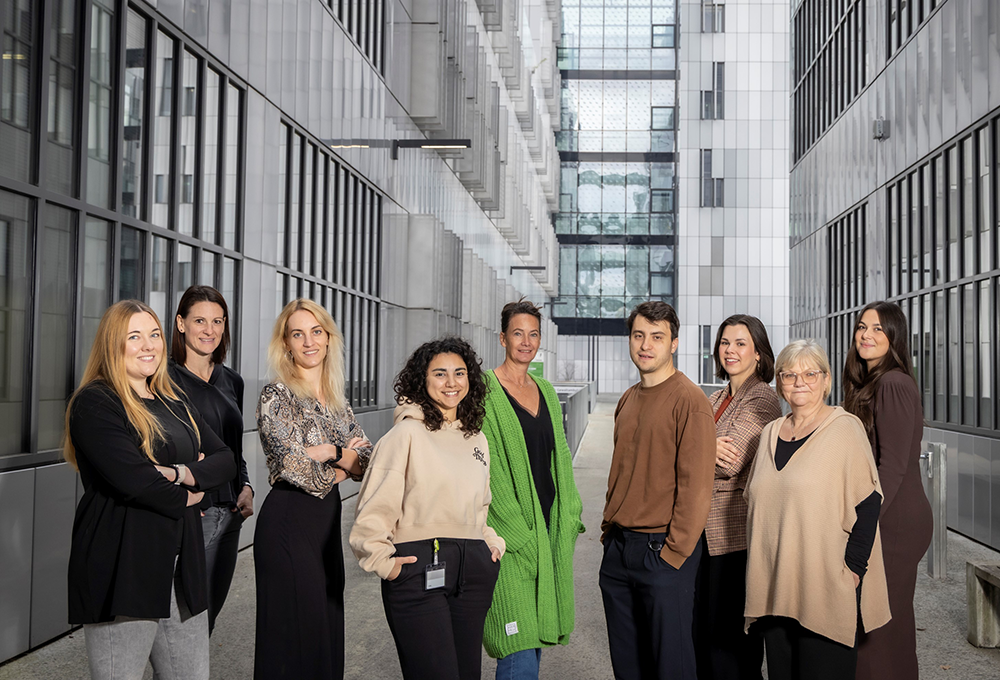
Forschungsteam Beate Rinner