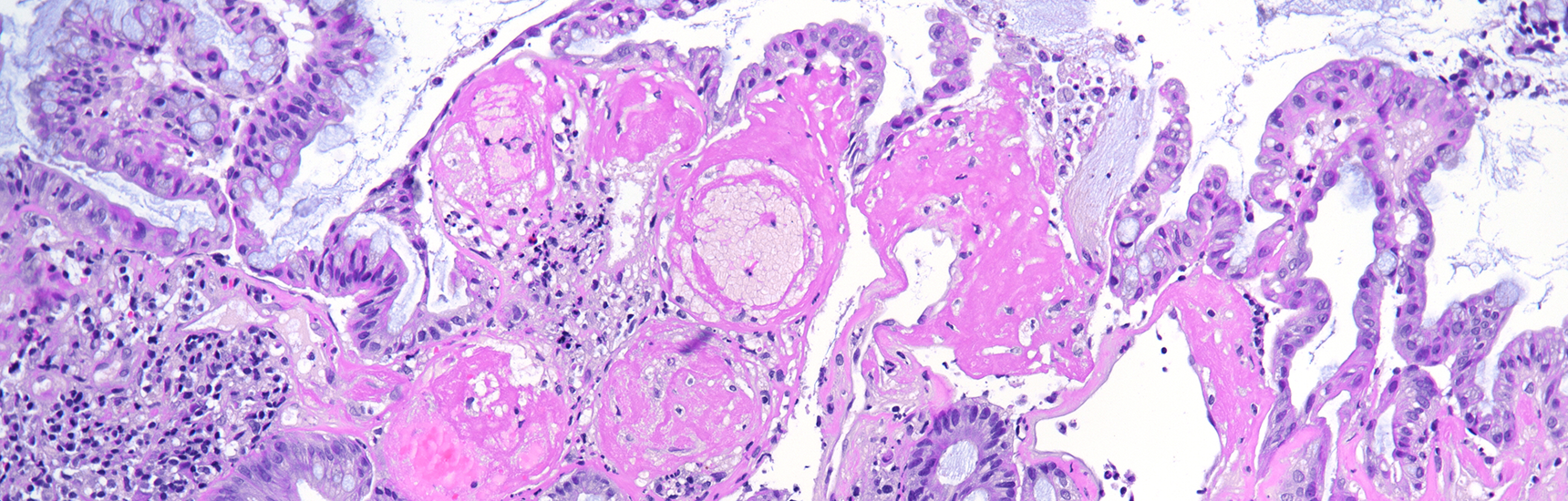
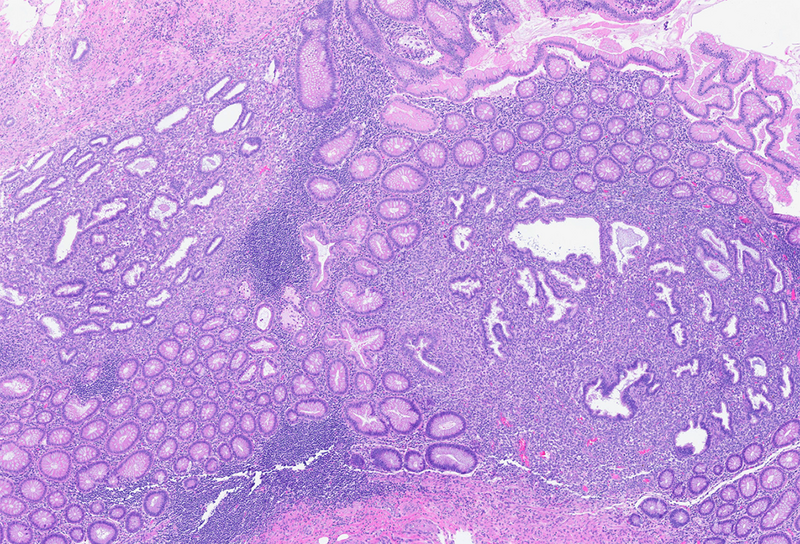
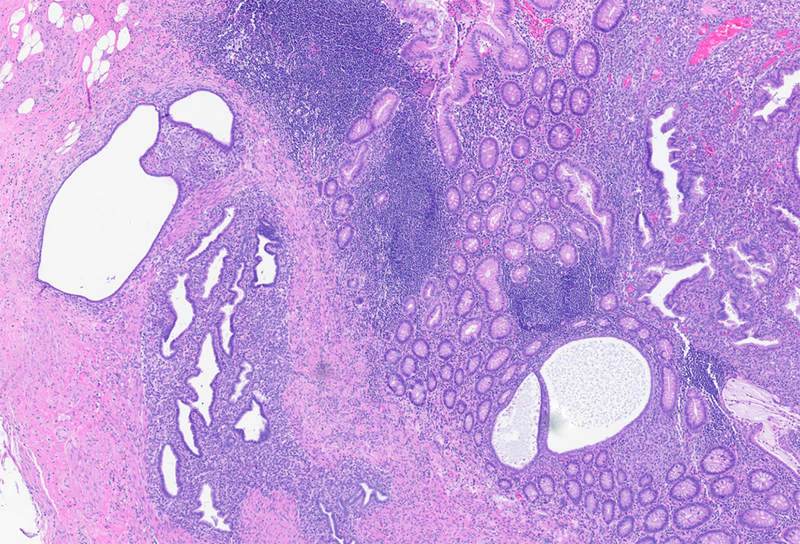
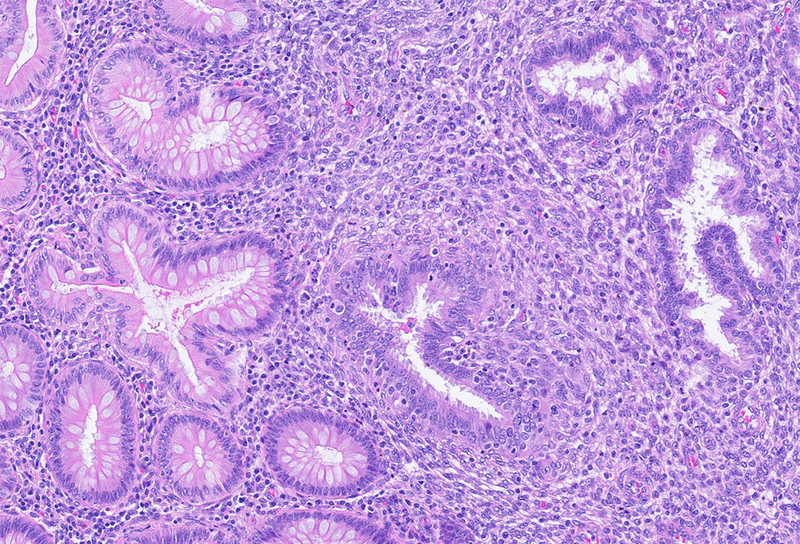
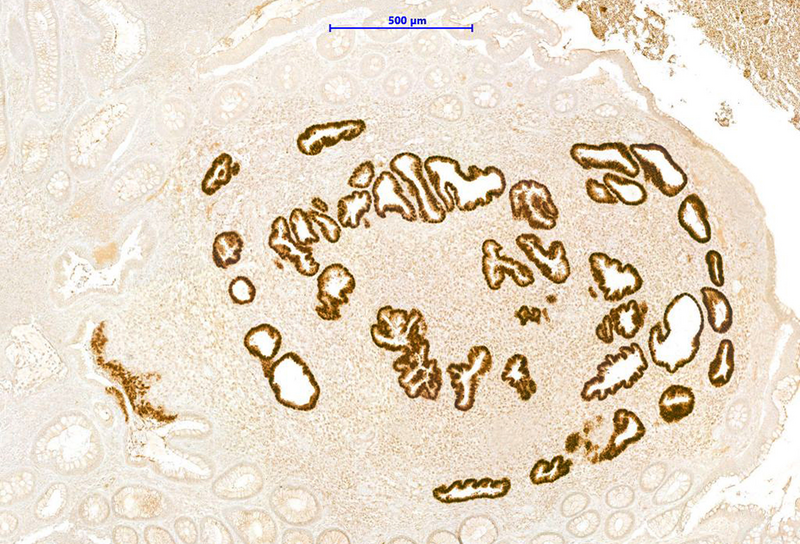
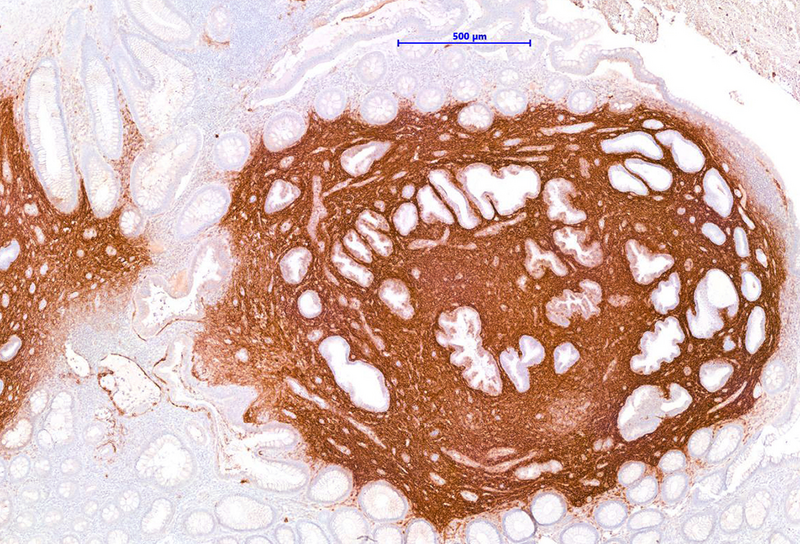
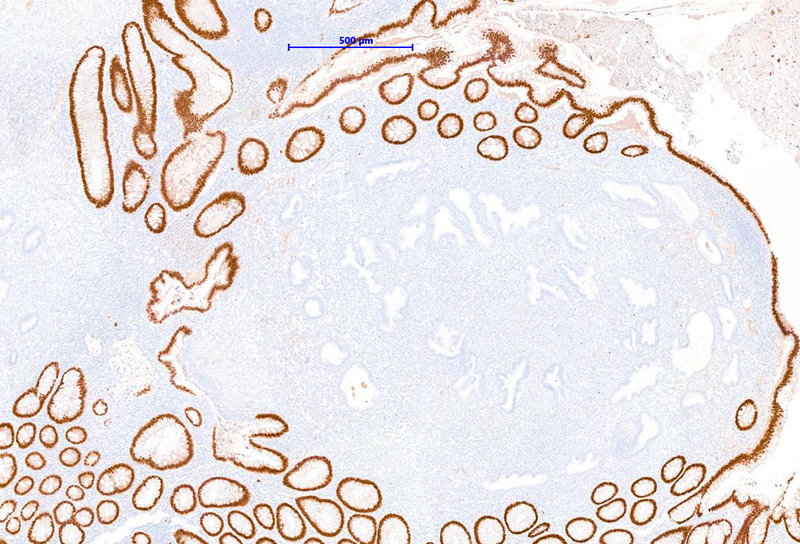
A 33-year-old woman underwent appendectomy. On histological evaluation, several foci of irregular tubular glands with cell-rich stroma were observed throughout the appendiceal wall (Panels A-C). Glands and stroma were positive for PAX8 (Panel D) and CD10 (Panel E), respectively. The normal epithelial components of the appendix mucosa stained with CDX2 (Panel E). The observed histological findings are consistent with appendiceal endometriosis. The remaining appendix was unremarkable.
Endometriosis of the appendix is considered a rare condition, although the reported prevalence varies across studies, ranging from 0.05% to 13.2%. It may be asymptomatic, being an incidental finding in surgical specimens, but it can also present with nonspecific symptoms or certain clinical scenarios, such as abdominal pain, lower intestinal hemorrhage, intussusception, and bowel perforation.
The pathogenesis of endometriosis is still not fully understood. Several theories have been developed, including retrograde menstruation, celomic metaplasia, embryogenic rests, lymphatic and/or vascular dissemination, and stem cell origin, with hormones, altered immunity, and genetics/epigenetics also playing a role.
The diagnosis of endometriosis is usually straightforward, by recognizing the presence of at least two of the following elements: endometrial glands, endometrial stroma, and hemorrhage/hemosiderin-laden macrophages. Endometrial glands stain with PAX8 and estrogen and progesterone receptors, and endometrial stroma stains with CD10, aiding in its recognition, but also with estrogen and progesterone receptors.
Some differential diagnoses must be entertained when considering an endometriosis diagnosis, such as endosalpigiosis and endocervicosis (both lack endometrial stroma and hemorrhage). During pregnancy and exogenous hormone therapy, the endometrial stroma may become decidualized, raising concern for an epithelial malignant tumor. Endometriosis has a neoplastic potential, giving rise to several types of endometriosis-associated neoplasms, the most common being endometrioid adenocarcinoma and clear cell carcinoma. The rates of neuroendocrine tumors in patients with endometriosis appear to be the same as in the general population.