An 86-year-old female patient underwent endoscopic investigation of the upper gastrointestinal tract, during which a polyp measuring 3 cm in its largest dimension was identified in the gastric antrum. A polypectomy was performed.
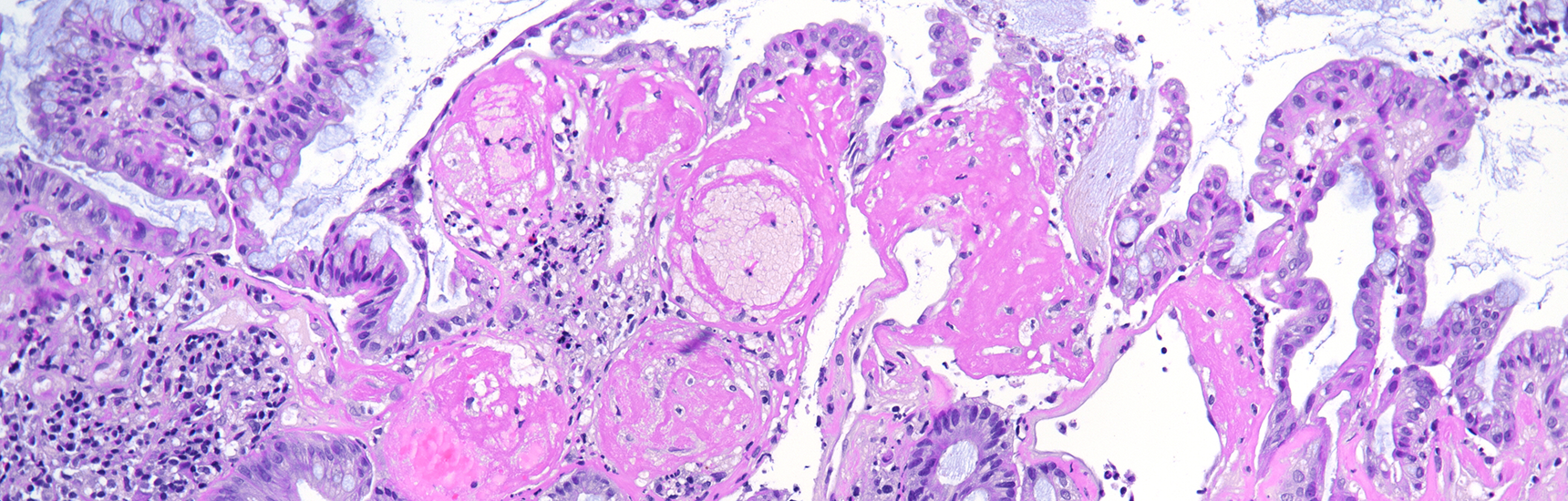
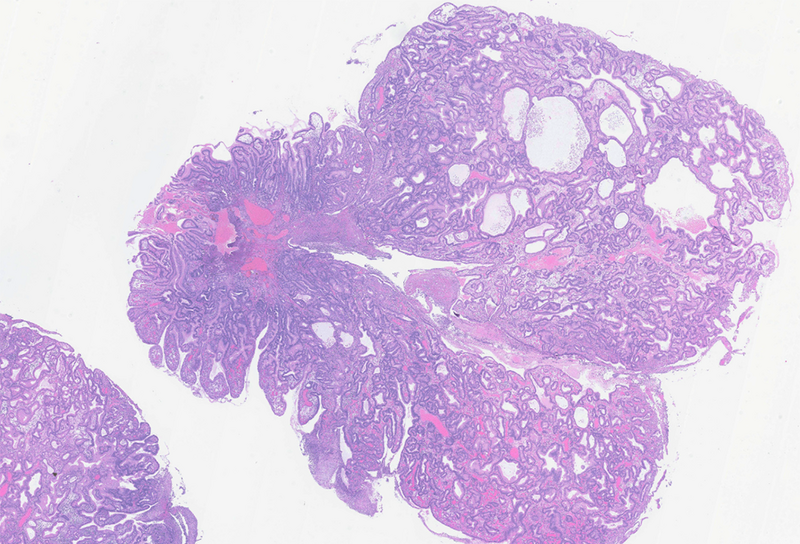
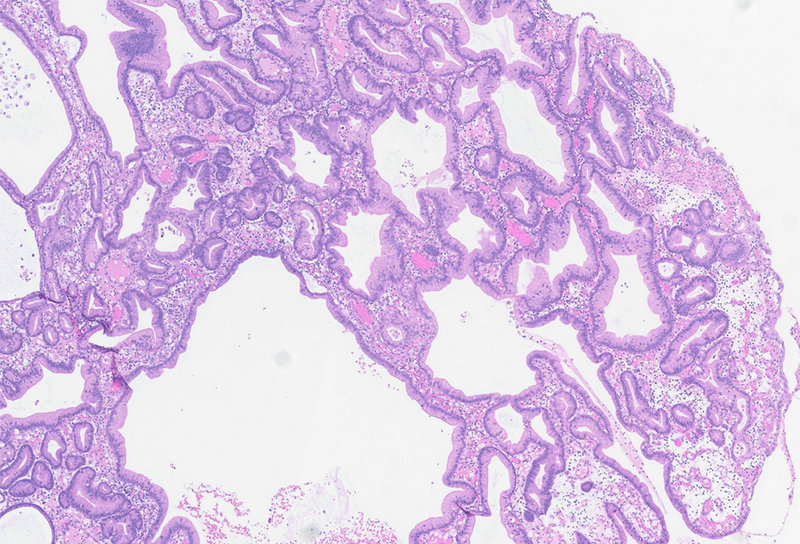
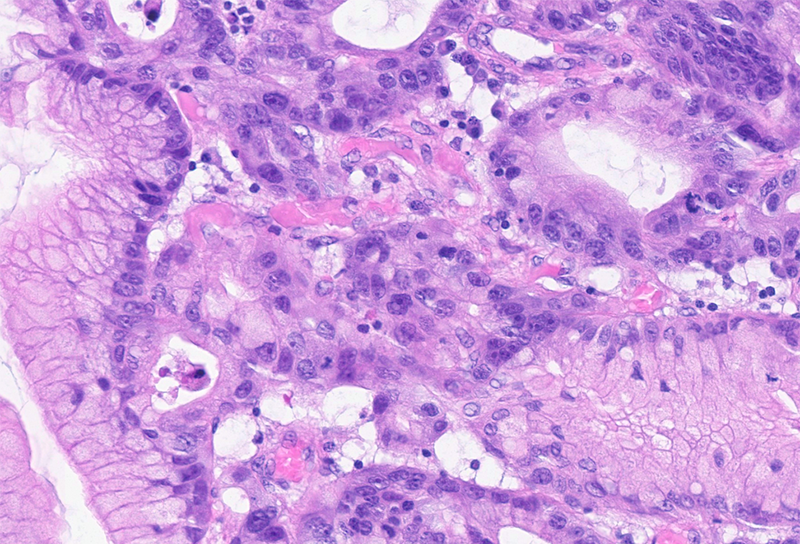
Histologically, the lesion proved to be a gastric hyperplastic polyp, composed of elongated and distorted hyperplastic foveolae, with focal erosion (Panels A and B). The glandular pits were irregular and cystically dilated (Panel C) and the surrounding stroma was edematous, containing abundant inflammatory infiltrate and scattered thin-walled vessels.
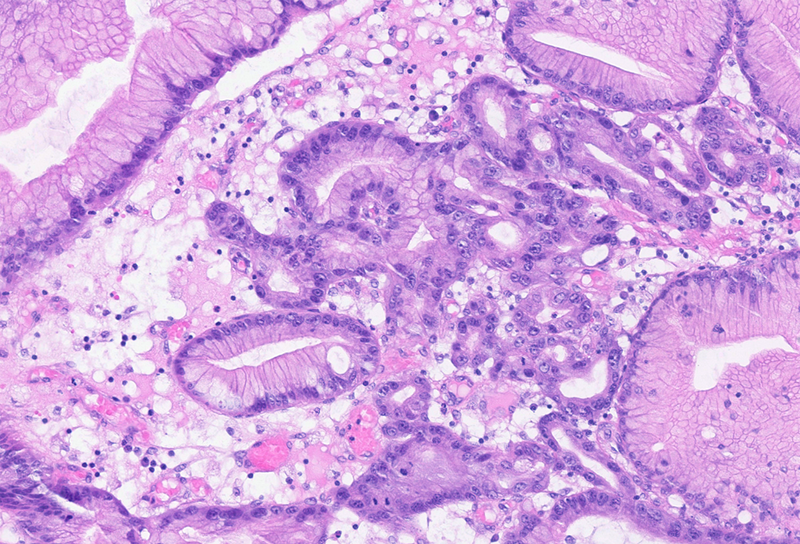
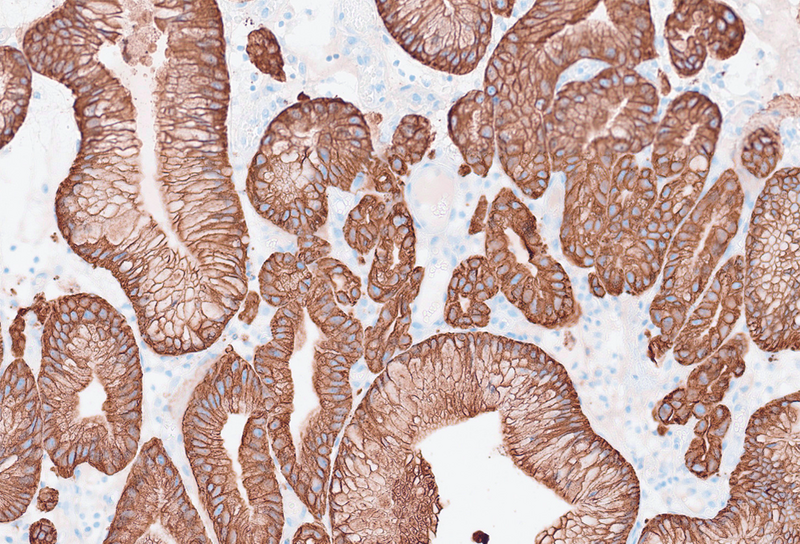
Focally, high-grade dysplasia was present, with cytologic atypia, loss of polarity, enlarged nuclei and prominent nucleoli. In these high-grade dysplastic areas, glandular crowding, a cribriform architectural pattern and small infiltrative tumour nests were also present (Panels D and E) and highlighted by pancytokeratin immunohistochemistry (Panel F). These findings were consistent with an intramucosal adenocarcinoma, developed in a gastric hyperplastic polyp.
Gastric hyperplastic polyps develop as a hyperproliferative response to longstanding inflammation or injury. Although they were originally described as being more common in the gastric antrum (in association with Helicobacter pylori gastritis), they are now known to occur throughout the whole stomach, in particular in autoimmune gastritis. In this setting, hyperplastic polyps represent the most commonly encountered polypoid lesions.
Although essentially benign, these lesions can harbor dysplasia, even high grade dysplasia as documented in our case, which may predispose to gastric cancer and appears to be more frequent in hyperplastic polyps that occur against a background of autoimmune gastritis.