Forschung Gottfried Schatz Forschungszentrum

Research focus Signaling

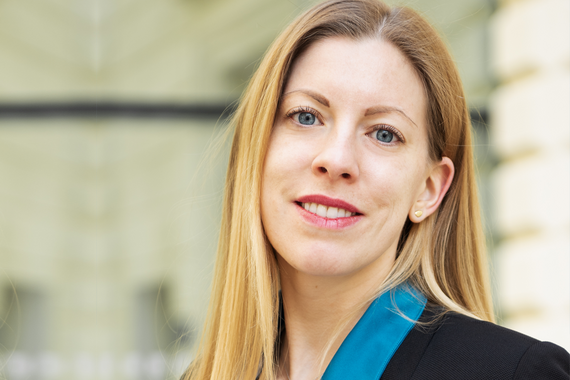
PI: Corina Madreiter-Sokolowski

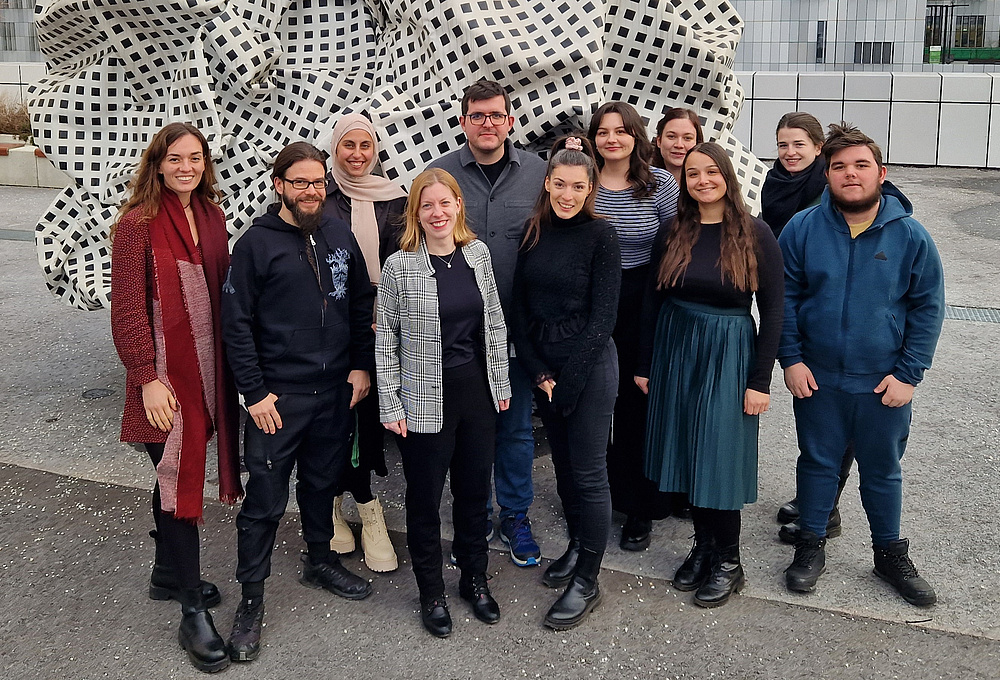
Focus: The research team led by Corina Madreiter-Sokolowski investigates how mitochondria function – and why they sometimes fail – during aging, in age-related diseases, and in Dravet syndrome. Using cutting-edge fluorescence microscopy, the team analyzes signaling pathways across a broad range of experimental systems, including cellular aging models, cancer cells, patient-derived cells, and the nematode Caenorhabditis elegans. The ultimate goal is to translate these mechanistic insights into new strategies to keep cells healthier for longer and to improve therapies for age-related diseases, cancer, and Dravet syndrome.

Networking: Corina Madreiter-Sokolowski's research team closely cooperates with internationally renowned aging experts and clinic colleagues to study mitochondrial metabolic function. Interdisciplinary research is highly appreciated to gain new input and to bundle know-how and expertise.

Projects

FWF: Mitochondrial (dys)funktion in Dravet-Syndrome

  • Dravet syndrome is a severe, early-onset epileptic encephalopathy. The current project focuses on understanding how impaired mitochondrial function affects energy metabolism, cellular signaling, and overall cellular health. By unraveling these mechanisms, the team aims to identify potential therapeutic targets that could mitigate mitochondrial dysfunction and improve outcomes for individuals with Dravet syndrome.

  • Duration: 2025 – 2028

  • Funded by: FWF

FWF: Promotion of lifespan by mitochondrial Ca2+-induced ROS

  • Reactive oxygen species (ROS) are essential molecules in signal transduction but damage their cellular environment if they occur in excess. In this project, nematodes (Caenorhabditis elegans) and cellular aging models are used to investigate how mitochondrial calcium regulation can specifically modulate ROS levels to extend lifespan and improve fitness in old age.
  • Duration: 2022 – 2026
  • Funded by: FWF

FWF: Research group SENIOPROM - Inter-organelle communication in cellular senescence

  • The FWF research group SENIOPROM aims to unveil the underlying mechanisms of cellular senescence. These include the function of mitochondria, the interaction of mitochondria with other organelles, metabolic regulation, and the maintenance of functioning proteins. Ultimately, these processes should serve as a starting point for developing new therapeutic strategies to specifically kill senescent cells and thus contribute to improved health in old age.
  • Duration: 2023 – 2027
  • Funded by: FWF

FWF: T3-induced rewiring of mitochondrial Ca2+ in cancer cells

  • Thyroid hormones are the master regulators of cellular metabolism and consequently also crucial for cancer cells, which require energy for their invasive growth. The current project will investigate how thyroid hormones modulate mitochondrial calcium homeostasis and, thereby, mitochondrial function and energy supply in different cancer cells.  
  • Duration: 2023 – 2026
  • Funded by: FWF

FWF: The role of mitochondrial calcium homeostasis in the aging process

  • In this Erwin Schrödinger project, the impact of mitochondrial calcium and ROS homeostasis on aging was investigated in nematodes (Caenorhabditis elegans) and mice. Following the stay abroad, a Caenorhabditis elegans research unit was set up at the Gottfried Schatz Research Center to investigate age-related subcellular changes in signal transduction by fluorescence microscopy.
  • Funded by: FWF
  • Project partners: Wolfgang Graier, Michael Ristow

FWF: Science Communication: Aging Research – Hands-On

  • The two-year project “Aging Research Hands-On” introduces pupils from peripheral, rural regions to academic aging research. Through interactive online teaching materials, mobile “Flying Aging Labs”, a youth aging symposium and internships at the Medical University of Graz, the project aims to strengthen understanding of aging research and highlight new educational and career opportunities

  • Duration: 2024 – 2026

  • Funded by: FWF

Division of Molecular Biology and Biochemistry

Corina Madreiter-Sokolowski 
T: +43 316 385 71948

Gesundes Altern

Video aus der Reihe "Wissenswert"